



About This Lesson
Well-being doesn’t have to be one more thing on your plate. It can be integrated into what you already do. This Supplemental Educator Wellbeing Webinar Bundle is a companion resource collection to Proof Positive’s professional development webinar, Practical Strategies to Support Educator Wellness and Student Wellbeing, led by Katie Curran, Chief Wellbeing Officer at Proof Positive.
Designed for educators, counselors, therapists, autism professionals, paraprofessionals, and support teams, this bundle provides practical, easy-to-use wellbeing strategies that support both educator wellness and student wellbeing in inclusive and neurodiversity-affirming classrooms.
Grounded in the science of positive psychology and the PERMA Theory of Wellbeing, participants are introduced to evidence-informed positive psychology practices that help build positive emotions, engagement, relationships, meaning, accomplishment, resilience, and overall wellbeing. These supplemental classroom resources help educators move from learning the science of wellbeing to actually practicing it both personally and with educators and students.
This bundle focuses on three practical Skills of Happiness highlighted throughout the webinar:
- Jolts of Joy (Positive Emotions)
- Character Strengths & Strength Spotting
- What Went Well (Gratitude Practice)
Here’s what you’ll get
- Jolts of Joy List | Positive Emotions Practice (Broaden-and-Build Theory)
This activity introduces educators and students to the science of positive emotions and helps them intentionally build moments of joy, calm, hope, gratitude, awe, amusement, and connection throughout the day.
Using the My Jolts of Joy List worksheet, educators and students identify simple activities that spark positive emotions and create a personalized wellbeing menu they can revisit during stressful moments, transitions, or difficult days.
Educators and students will:
- Learn about the “10 Big Positive Emotions”
- Reflect on activities that increase joy and emotional wellbeing
- Practice emotional awareness and self-regulation
- Create personalized coping and wellbeing supports
- Build positive emotion habits that support resilience
The webinar reinforces an important message: “Joy is not a distraction from learning. It’s a gateway into it.”
- Discover Your Character Strengths | VIA Strengths & Strength Spotting
This strengths-based activity helps educators and students discover what is RIGHT with them through the VIA Character Strengths framework. Educators and students complete the free VIA Character Strengths Survey and identify their Signature Strengths — the strengths that naturally help them thrive. Learners then reflect on how those strengths show up in school, relationships, interests, and everyday life.
Educators and students will:
- Complete the VIA Character Strengths Survey
- Identify Signature Strengths
- Practice strengths spotting in themselves and others
- Build confidence and positive identity development
- Strengthen self-awareness and classroom belonging
The webinar emphasizes that strengths spotting helps:
- Improve relationships
- Increase motivation and engagement
- Build cultures of recognition and respect
- Support educator mindset and expectations
This resource also includes accommodation ideas and team-based strengths discussions for educators and students with intellectual and developmental disabilities.
- Gratitude Brainstorm | What Went Well Gratitude Practice
This activity helps educators and students train their brains to mindfully notice, remember, and reflect on positive experiences.
Using the Gratitude Brainstorm worksheet, educators and students identify things they appreciate across multiple categories including family, pets, health, school, nature, friends, food, vacations, and special interests.
Educators and students will:
- Practice gratitude and reflection
- Build optimism and emotional resilience
- Strengthen perspective-taking skills
- Increase awareness of positive experiences
- Develop repeatable wellbeing habits
The webinar explains that while humans naturally focus on threats and challenges for survival, wellbeing grows when we intentionally make space to notice joy, gratitude, hope, and positive experiences too. This practice helps counter negativity bias while supporting classroom connection and emotional wellbeing.
Why you’ll love this activity bundle
- Provides ready-to-use positive psychology SEL activities
- Supports both educator wellness and student wellbeing
- Helps create neurodiversity-affirming classroom environments
- Encourages emotional awareness, resilience, gratitude, and confidence
- Low-prep and easy to integrate into existing classroom routines
- Flexible for general education, autism support, counseling, and inclusive classrooms
- Encourages connection, belonging, and positive classroom culture
- Based on evidence-informed wellbeing science and research
Ways to use
- Pair with the webinar: Practical Strategies to Support Educator Wellness and Student Wellbeing
- Integrate into SEL blocks or advisory periods
- Use during counseling sessions or small groups
- Start or end class with wellbeing reflection rituals
- Support classroom reset days and emotional regulation
- Reinforce strengths-based and inclusive classroom culture
- Use during staff wellness or educator wellbeing initiatives
- Adapt for virtual, hybrid, or in-person instruction
Benefits
Using wellbeing practices like Jolts of Joy, Strength Spotting, and What Went Well can help educators and students:
- Increase emotional awareness and coping skills
- Build confidence and positive identity
- Improve peer relationships and empathy
- Strengthen resilience and optimism
- Foster inclusion and belonging
- Support positive classroom climate and engagement
Looking for more wellbeing and autism-inclusive resources?
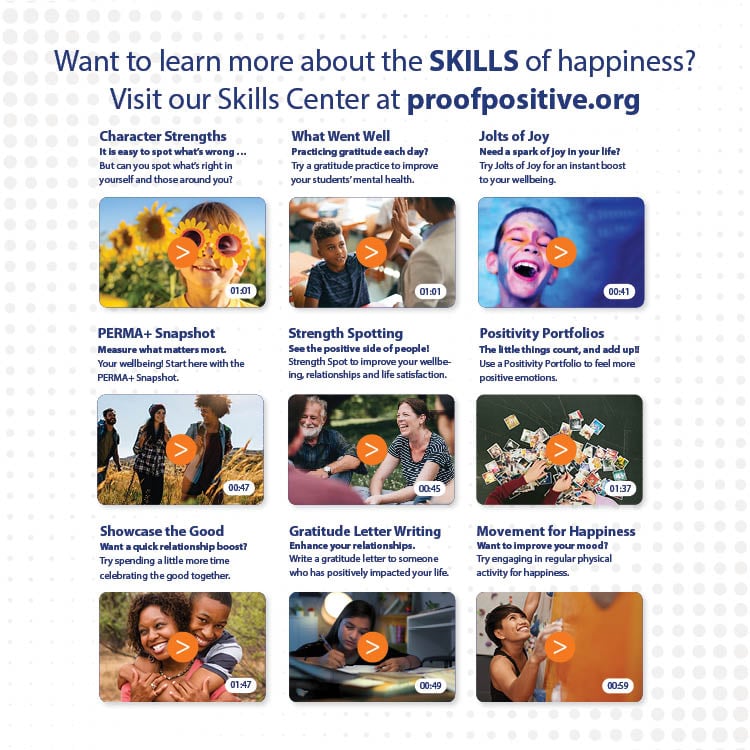
Explore additional free lesson plans, activities, unit studies, and Skills of Happiness resources in Proof Positive’s Skill Center.
Proof Positive’s resources are and will always be free. Be well!


